Choosing your claim
Brand Beliefs vs Brand Values: Why Every Values List Looks the Same
Most brand values are words no competitor would argue with; a brand belief is a position one would reject, and that's what lets buyers tell you apart.
By Ines Calloway · October 8, 2026 · 6 min read
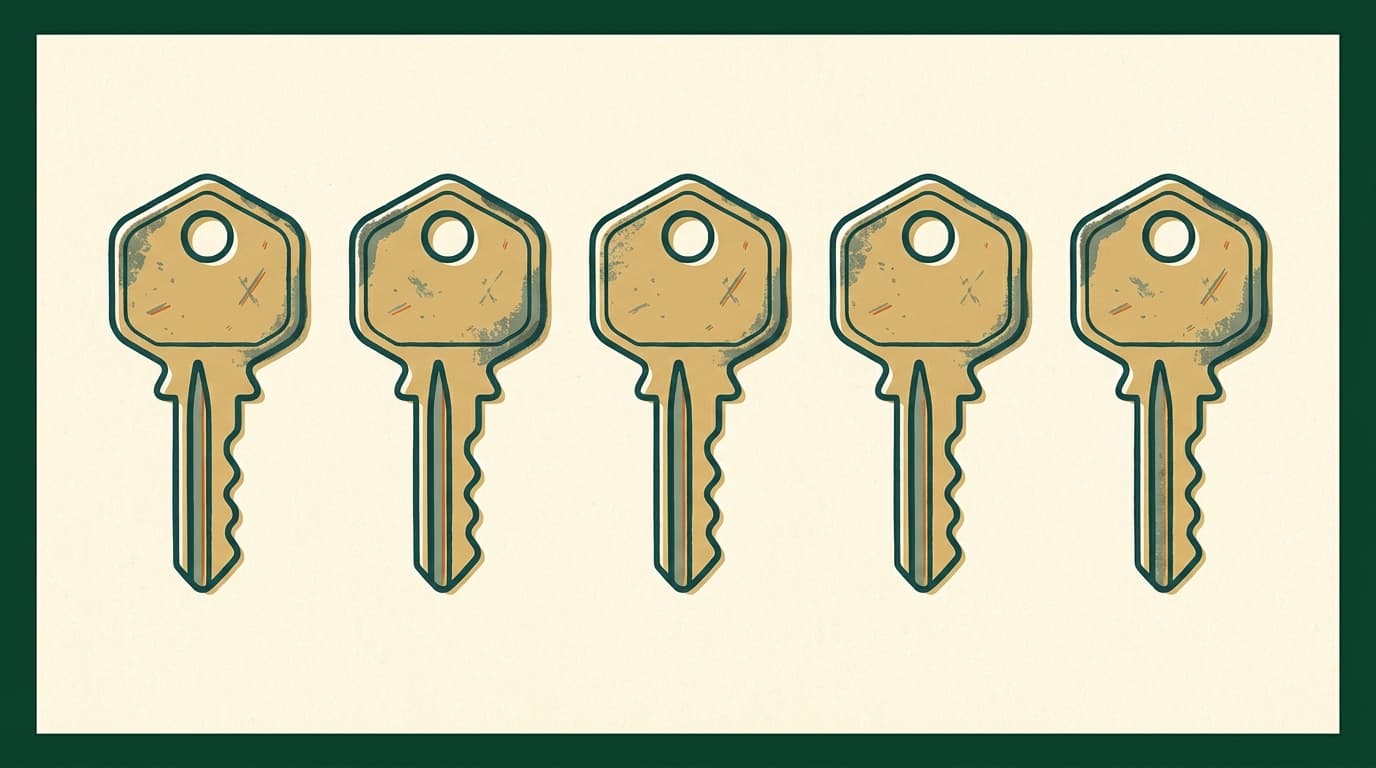
Open a competitor's homepage and scroll to their values. You'll find integrity, customer focus, innovation, maybe sustainability. Now open the values slide your own leadership team signed off on last year. Same words, often in the same order.
Both lists came out of the same process: a room of people looking for words nobody would object to. The result is a set of statements buyers skim past, because every company they're considering says the same thing. A short list of beliefs does the job those values were meant to do. A belief is a position a credible competitor could look at and say, "We'd never do that." This post covers the difference between brand beliefs and brand values, why values lists converge, and how to find the beliefs your business already acts on.
Values lists converge because they're built for agreement
Values workshops are designed to produce consensus. A draft goes from the people who wrote it to leadership, and often to legal, and at every step the sharpest words get sanded down. Anything that might put off a customer, a hire or an investor comes out. What survives is whatever nobody in the room disagreed with.
Nobody outside the room disagrees with it either. No company will publish "we value dishonesty" or "quality isn't a priority for us." When the opposite of a statement is something no business would ever say, the statement tells a buyer nothing about you.
Look at the examples of brand values most companies pick from: integrity, accountability, reliability, collaboration, transparency, customer focus, innovation, sustainability. Every one of them is reasonable, and every one of them is shared. Even the definitions blur the line this post is drawing. The Branding Journal, in its guide to brand values, calls them "the foundational beliefs that a company stands for." When everyone draws on the same short list, you end up in the brand sameness trap, where your marketing reads like your competitors' with the logo swapped.

A belief is a position a competitor could reject
A value describes how you intend to behave. A belief describes what you think is true about your market, and usually what you think the rest of your industry gets wrong.
That difference matters because a belief has a cost. Some buyers will disagree and go elsewhere, and you'll pass on some work because it doesn't fit. Values are written to include everyone; beliefs sort people into those who agree and those who don't.
The simplest test is to flip the statement. Take any line from your values page and ask whether a credible competitor could proudly say the opposite:
- "We put customers first." The opposite is "we put customers last." Nobody says that, so this one is a value.
- "We price per project, because hourly billing rewards being slow." Plenty of competitors would happily defend hourly billing. That one is a belief.
If the opposite is something no sane business would say, you've written good manners. Our messaging white space test runs the same check across a whole homepage.
Beliefs show up in decisions a competitor would make differently
Basecamp is a clear case. Most project-management software charges per seat, so the bill grows with every person you add. Basecamp's pricing page lists flat monthly plans, from $59 for Studio to $299 for Unlimited, each with unlimited users and no per-user fees. Behind that is a belief that a company shouldn't pay more for letting more of its team use the tool. Per-seat vendors can and do argue the opposite, and the belief is visible on the invoice as well as the About page.
Patagonia did the same with sustainability, one of the most common values on any list. On Black Friday 2011 it ran a full-page print ad reading "Don't Buy This Jacket," asking people not to buy what they didn't need, including its own product. That is a belief stated at the company's own expense: overconsumption is the problem, even when it's our revenue. It was a real risk. As it turned out, IMD's case study on the campaign reports that sales "increased by approximately 30% in the nine months following the ad." That doesn't prove the ad caused the rise, but taking the position didn't cost Patagonia its business.
A company that lists "innovation" as a core value and then runs the same playbook as everyone else has claimed the virtue without making a choice that shows it. Buyers have no way to tell it from the next vendor.
Buyers choose companies that see the world the way they do
A belief earns its place because of who reads it. Your mission and values are mostly for you: they keep the team pointed the same way. Your approach is for buyers. It's the way you see the problem, and the choices that follow from it. People pick a partner whose view of the problem matches their own, then look for proof that the partner acts on it.
That's why a stated belief, backed by a decision like Basecamp's pricing, does more work than a values page. It tells a buyer how you think, and lets the ones who think the same way recognize you.
You already act on beliefs you haven't written down
Most businesses don't need to invent beliefs. They already act on some; the values workshop just filtered them out. Three places to look:
The work you turn down. List the projects, clients or requests you've said no to in the last year, and why. Each reason is usually a belief: "we don't do one-off campaigns because they don't compound" is a position a competitor would argue with.
The industry habit that annoys you. Every team has one: a practice everyone in the category follows that you think is lazy, wasteful or bad for clients. Write down what you do instead and why.
The trade-off you pay for. Find a place where you deliberately choose the harder or more expensive path: slower onboarding, a smaller client list, a higher price with fewer add-ons. If it costs you something and you keep doing it, you believe something.
Run the flip test on each candidate, and keep the ones where a credible competitor would take the other side. Then check that your business actually behaves that way. A belief you don't act on is a more interesting-sounding value. Our guide on how to prove a differentiator covers the evidence buyers find convincing.
Safe values have a real benefit, and a real cost
Safe values are easy to live with. Legal signs off quickly, sales never has to defend them, and no prospect is put off. The cost comes later. When your brand reads like every other vendor's, buyers fall back on price and size, and that is a contest most businesses lose to someone bigger or cheaper.
Beliefs cost something up front: some prospects will read them and decide you're not for them. The ones who stay are choosing you for a reason a competitor can't copy by editing their homepage. If you want a second pair of eyes on which of your positions would hold up, get in touch through our contact page to talk it through.
Go back to the competitor values page you opened at the start. Put your own list next to it and cross out every line either company could have written. Whatever is left is where your beliefs start.
Frequently asked questions
- What is the difference between brand beliefs and brand values?
- A brand value describes how a company intends to behave, such as integrity or customer focus, and almost any company can claim it. A brand belief describes what the company thinks is true about its market, usually something its industry gets wrong. The test: a credible competitor could proudly say the opposite of a belief, but nobody would say the opposite of a value.
- What are some examples of brand values?
- The most common are integrity, accountability, reliability, collaboration, transparency, customer focus, innovation and sustainability. They're reasonable, and that's the problem: because nearly every company lists them, they don't help a buyer choose between vendors.
- What are examples of brand beliefs?
- Basecamp prices its plans at a flat monthly rate with unlimited users, on the belief that a company shouldn't pay more for letting more of its team use the tool. Per-seat vendors would argue the opposite. A service firm that prices per project because hourly billing rewards being slow is stating a belief in the same way.
- How do you find your brand's beliefs?
- Look at the work you turn down and why, the industry habit you think is wrong and what you do instead, and the trade-offs you keep paying for. Keep the candidates a credible competitor would argue against, then check that your business actually acts on them.
Sources
- What Are Brand Values? + Examples — The Branding Journal
- Basecamp pricing — Basecamp
- Patagonia's sustainability strategy: Don't buy our products — IMD (case study)